
FOBO is the New FOMO.
I bought some new golf shoes last week.
It was time. I walk miles in my golf shoes every week, and my old shoes were worn out at the heel.
My wife would tell you that I’m a nightmare in a shoe store. She’s right. I try on all the shoes and then retry previously tried-on shoes. And, if I’m at a mall, I might need to go to all the shoe stores.
Thankfully, I had already decided what kind of golf shoes I wanted. I had a pair of Adidas Tour 360s a few years ago and loved them. They’re pricey. The pros wear them.
But the shoe has changed since my older model, so I went to the golf store to try on the new version. I found my size, put them on, and pranced around the store, simulating golf swings. For once, it didn’t take me long to decide. I loved them. They were the shoes for me.
But then, I hate to admit it, I had to check online to see if there were other colors and better prices for the same shoe.
There were lots of other options.
The golf store had one color in my size. Online, there were ten. And one online retailer had the shoes on sale for half the price.
Ugh.
I hate being that person who doesn’t support the local brick-and-mortar store, but… half off?!
So, I decided to try something. The golf store advertises price matching. I figured I’d feel less guilty about trying on their shoes and buying them elsewhere if I at least gave them the opportunity to match the online price.
An assistant manager turned me down, saying the competitor needed to be a physical store or Amazon. I stepped away from the desk and checked the store’s fine print on price matching.
The employee was wrong.
The online competitor was actually listed as an approved retailer for price matching.
I drew the line. I wasn’t going to correct her and be THAT person.
So, I left the store, sat in my car, and ordered the shoes online for half price.
I felt guilty and exhilarated.
And a little exhausted.
Patrick McGinnis, the man who coined “FOMO” (fear of missing out), coined FOBO at the same time while a student at Harvard Business School two decades ago.
FOBO is the “Fear of a Better Option.”
FOBO could keep me in a shoe store for hours, and then keep me online for a few more.
FOMO
“Something better is happening, and I’m missing it.” It makes us want to say yes to everything.
FOBO
“There might be a better choice, so I’d better not commit yet.” It makes us afraid to say yes to anything.
Choices, Choices, Choices!
In the grocery store of a century ago, you might find only a few hundred total items. You’d walk up to the counter, tell the grocer you needed some sugar, and be handed the one brand in the store.
Off you go.
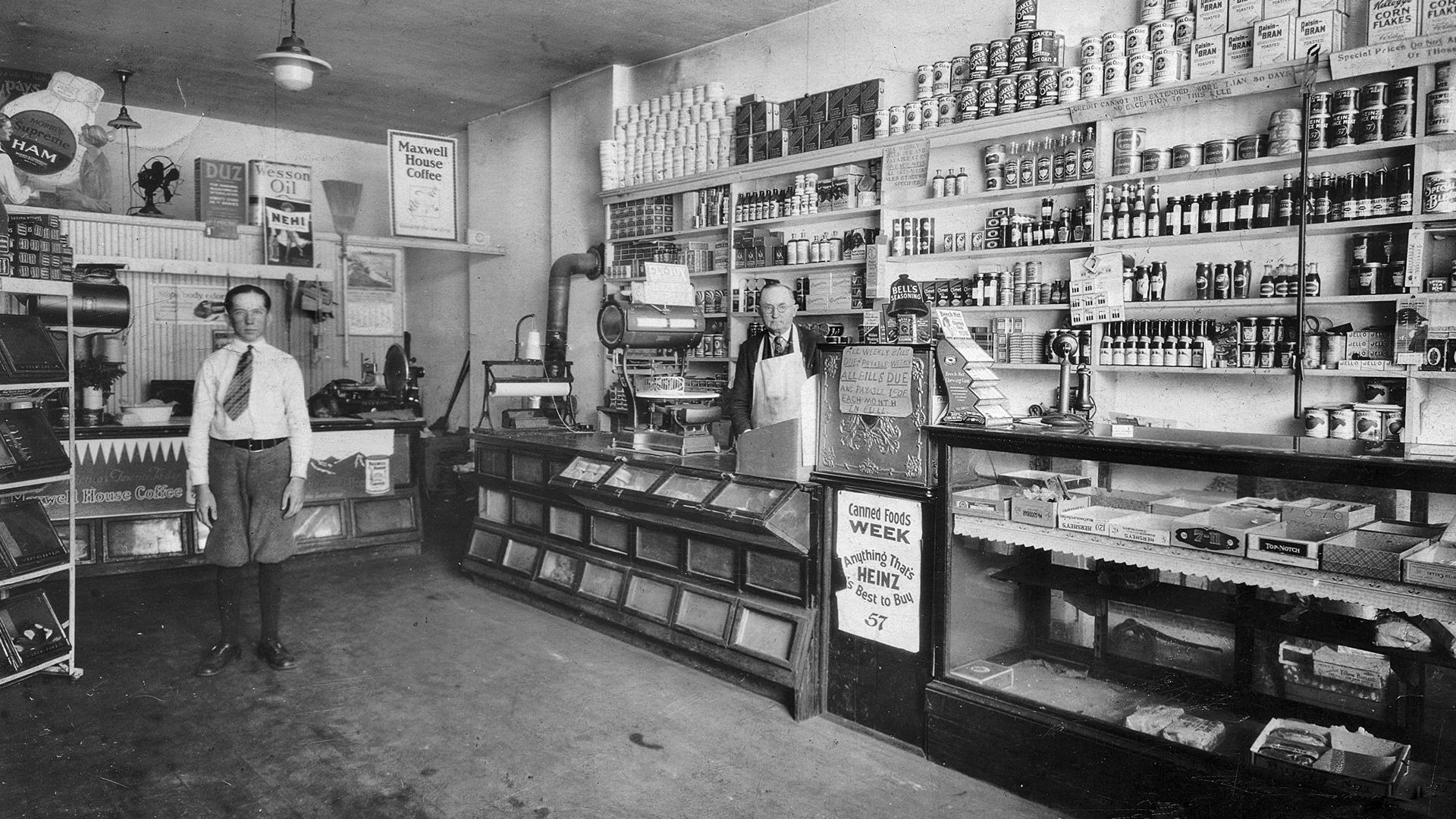

In today’s supermarket, you could spend 20 minutes deciding between 15 different kinds of mustard.
If you grew up 100 years ago in rural America, you might milk the cows early in the morning and, voilà, you’ve got milk!
Today, you can stand in the dairy aisle scratching your head for half an hour trying to decide between whole milk, 2 percent milk, skim milk, almond milk, coconut milk, organic milk, cashew milk, high-protein milk, lactose-free milk….
When I was a kid, we got a grand total of four TV stations. Only two of them came in clearly: Channel 2, our CBS affiliate (where my dad was on the air), and PBS, the public station.
If it was Friday night, it was The Partridge Family and The Brady Bunch. If it was Sunday night, it was The Wonderful World of Disney.
Today, there are more than 300 subscription video-on-demand providers in the United States: Netflix, Prime Video, Disney+, Hulu, Max, Apple TV+, Peacock, Paramount+….
Have you ever had two hours to watch a movie and spent 45 minutes surfing around trying to decide what to watch, only to realize you no longer had enough time for a movie, so you settled for a rerun of Blue Bloods?
Don’t get me wrong. I love all the choices. I love the color (and the price!) of my new golf shoes.
But choices can be paralyzing.
A wealth of information creates a poverty of attention.Herbert Simon
Nobel Prize-winning economist Herbert Simon wrote, “A wealth of information creates a poverty of attention.”1
Attention is a finite resource.
If you once had 10 pieces of information competing for your attention and today you have 10,000, you may be smarter than you once were, but your brain hasn’t acquired 1,000 times as much capacity for attention.
Simon recognized that attention operates like any other scarce commodity. When information becomes abundant while our capacity to pay attention remains limited, attention becomes increasingly precious.
And every additional option demands a little piece of that precious attention.
The more choices we have, the more attention we must spend evaluating them. Which one is best? What am I missing? What if I choose wrong? What if something better comes along?
“This is the way,
walk in it.”
This Is the Way, Walk in It
With today’s lightning-paced increase in choices and the attendant “Fear of a Better Option,” maybe the whole world will eventually ask: Is there any ordering simplicity that can calm our fears?
Is there a way we can be led through the maze of choices without becoming anxious, paralyzed, or regretful?
When the world asks that pressing question, the Gospel shines with a beautiful and compelling answer:
There is an all-knowing Father who longs to show us the way.
God has always wanted to lead His people.
Eight centuries before Christ, a beautiful promise came through the prophet Isaiah:
20 And though the Lord give you the bread of adversity and the water of affliction, yet your Teacher will not hide himself anymore, but your eyes shall see your Teacher. 21 And your ears shall hear a word behind you, saying, “This is the way, walk in it,” when you turn to the right or when you turn to the left.
During the reign of Hezekiah, the people of God in the Southern Kingdom were terrified of Assyria, so their political leaders hatched a plan to “seek shelter in the shadow of Egypt” (Isaiah 30:2, ESV).
An alliance with Egypt seemed to make sense, but it was far from God’s will.
“Ah, stubborn children,” declares the Lord, “who carry out a plan, but not mine, and who make an alliance, but not of my Spirit….” (Isaiah 30:1, ESV)
They had their own plan. They were going their own way.
But in His unquenchable covenant love, God would not leave His people unguided. He promised that His voice would pursue them, even as they wandered:
“This is the way, walk in it.”
Charles Spurgeon highlighted the extraordinary grace in Isaiah’s prophecy:
“The wanderer seeks not God, but his God seeks him. Man turns from the God of love, but the love of God turns not away from him.”2
The image is unmistakable.
The voice comes from behind because the wanderer has turned his back on God.
When you turn away from God, He pursues you in love.
When you reject His promptings, He still speaks.
When you are at your worst and headed the wrong way, still the gracious voice of God comes from behind:
“This is the way, walk in it.”
Curing FOBO
As I’ve spent time reflecting on Isaiah’s words of grace this week, here is the progression of thought that can defang FOBO’s taunts:
There is a right way.
Contrary to the spirit of the age that relativizes morality, there is a right way and a wrong way. There is a true way and a false way. There is a way that leads to life and a way that leads to destruction.
We can’t know the right way without God.
When we are overwhelmed with choices, the solution can’t ultimately be found within ourselves. Freedom from FOBO begins when we admit that we cannot see enough or know enough to be certain of the right decision.
It doesn’t mean that we abandon research. It doesn’t mean that we stop analyzing our choices. It means that we acknowledge our limits.
There can be a way that seems right to us, think alliance with Egypt, that is completely wrong.
God wants to guide His children.
Being led by God isn’t a privilege we earn through good behavior or even spiritual maturity. It’s God’s heart to guide us.
Isaiah’s prophecy reminds me of David’s joyous exclamation:
“Surely goodness and mercy shall follow me all the days of my life” (Psalm 23:6, ESV).
David was painting a picture of being chased down by God’s covenant love (hesed).
Such knowledge is not only comforting; it’s energizing. It’s the certainty of God’s grace that draws us into His heart. Who wouldn’t want the direction of an all-knowing, all-loving God? Who wouldn’t want to follow a God who has only the best in mind for His children?
Amid so many choices, the question changes.
The question is no longer simply, What is the best choice?
The question becomes, What is God’s way?
This is why Isaiah 30 is so utterly freeing. We do not need to analyze a million choices as though everything depends upon our ability to identify the perfect one. We can narrow all of life to one great choice, to seek first the kingdom of God.
Life becomes simple when we really want what God wants.
Instead of facing each day under the pressure, I need to make sure I choose the best possible option, we can approach life as a God-led adventure.
The more we discover the joy of a God-led life rather than a hyper-analytical life, the more we want to be led by God.
Isaiah’s prophecy crescendos with a breathtaking forecast:
22 Then you will defile your carved idols overlaid with silver and your gold-plated metal images. You will scatter them as unclean things. You will say to them, “Be gone!”
Many of our fears are fueled by our idols.
It’s the idol of success that makes us afraid of failure.
It’s the idol of approval that makes us afraid of rejection.
But the more we experience the freedom and delight of the Spirit directing our steps, the more ready we become to tell every idol:
“Be gone!”
We aren’t going to wake up tomorrow and discover that the number of choices before us has decreased. We aren’t going to have fewer options. We’re probably going to have more.
In the end, the antidote to FOBO is not becoming better at evaluating every possible option.
It is learning to trust the One who knows the way.
“God, I’m so thankful that You have come in the Person of Jesus Christ to reveal Yourself and to fulfill Your promise to guide me. Let me hear that sweet voice in my spiritual ear saying, ‘This is the way; walk in it.’
“Lord, attune my heart to Your voice. There are far too many choices for my natural mind to know what is best. But You know, O Lord.
“I want what You want. I want to walk in Your way. Show me the way, Lord, and teach me to walk in it, today and every day.
“In Jesus’ name, Amen.”
 English