

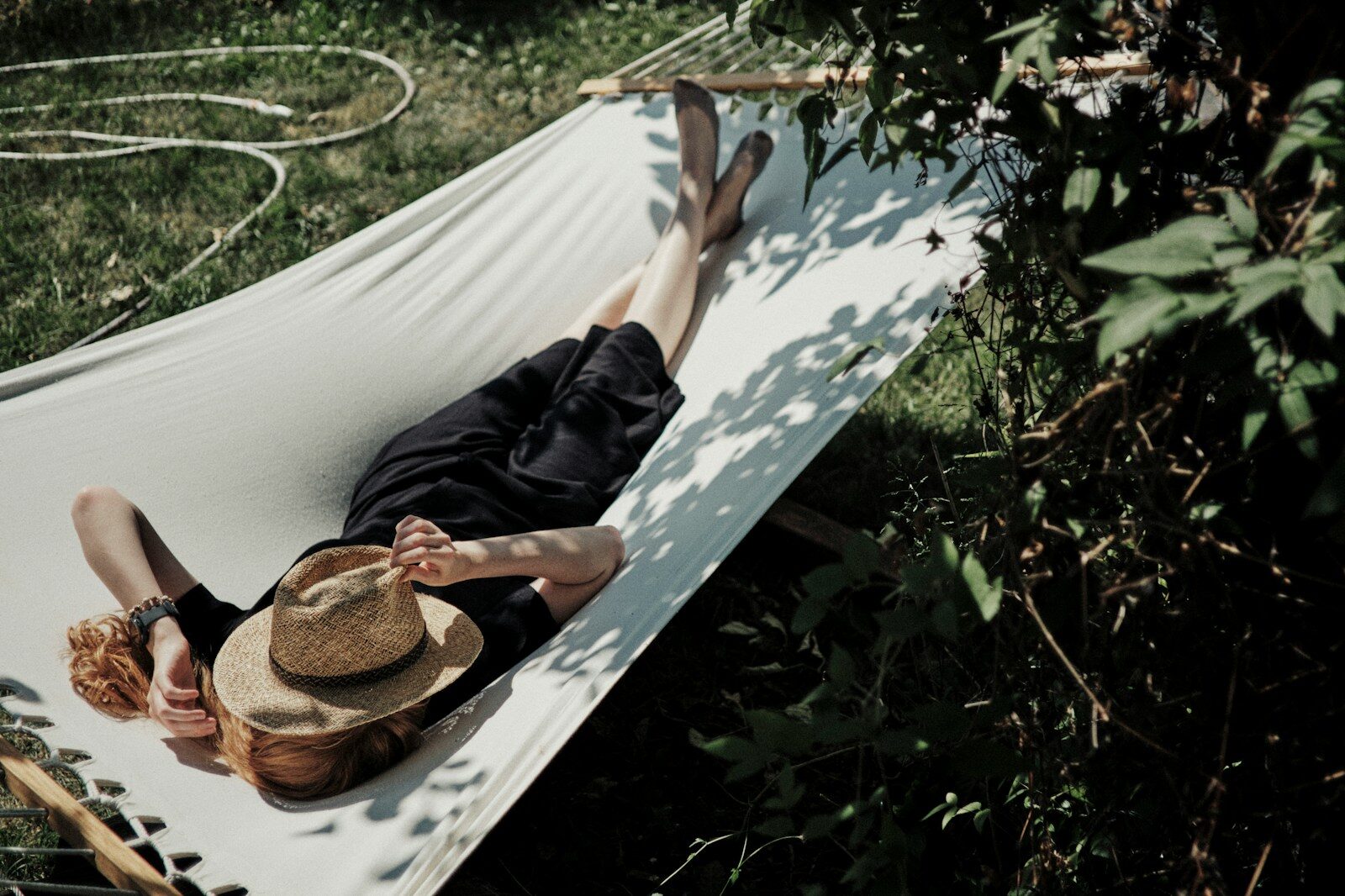
Matthew 11:28, ESV
In 2011, a postal worker in Durham, North Carolina, had fallen behind on his deliveries and was subsequently caught dumping seven bags of mail in the woods. Interestingly, the article noted that postal authorities had received only one or two complaints of missing mail. Seven large bags of mail were never delivered, yet no one inquired. It proves that even in 2011, no one wanted any more mail.
Everywhere you go, people seem overwhelmed, over-stressed, and under-rested. It’s the most common response when you ask someone how they’ve been: “Busy.”
I want to continue our exploration of the Gateways to Grace—the timeless spiritual disciplines of the Christian life—with some of the most beautiful, stirring, and life-changing words of Jesus:
Matthew 11:28–30 (ESV) — Come to me, all who labor and are heavy laden, and I will give you rest. Take my yoke upon you, and learn from me, for I am gentle and lowly in heart, and you will find rest for your souls. For my yoke is easy, and my burden is light.
Eugene Peterson’s rendering of these verses in The Message is striking:
Matthew 11:28–30 (MSG) — “Are you tired? Worn out? Burned out on religion? Come to me. Get away with me and you’ll recover your life. I’ll show you how to take a real rest. Walk with me and work with me—watch how I do it. Learn the unforced rhythms of grace. I won’t lay anything heavy or ill-fitting on you. Keep company with me and you’ll learn to live freely and lightly.”
Doesn’t your soul crave “real rest”? How wonderful a thought—to walk with Christ and learn “the unforced rhythms of grace!”
To glean the treasure of this text and open another beautiful gateway of grace, we need to understand a disturbing problem—the restlessness of our hurried and over-stressed lives. What lies behind it? Why is it getting worse? What’s at stake?
Doesn’t your soul crave real rest?
We also need to consider an intriguing puzzle: a yoke is an image of work. It is what is placed on the necks of oxen for labor in a field. Why, then, does Jesus use the image of a yoke to describe what it means to rest in Him?
And to get at the answer, we must embrace a beautiful privilege—perhaps the greatest privilege Jesus offers other than salvation itself: the privilege of taking up His yoke. I want to explain why it’s a privilege rather than a burden.
Understand the problem.
Demystify the puzzle.
Embrace the privilege.
The Problem: Why Are We More Busy and Stressed Than Ever?
When was the last time you asked someone how they were and said, “Well rested and content?”
Even retired people tell me that they feel busier than ever.
What has happened to us?
Most American sociologists who wrote before the technology boom that began in the 1950s believed that modern inventions would produce much more leisure. Some believed that the average American would be working only about 3 hours per day. Some believed that a crisis was looming: Americans would be bored with too much time on their hands. The woefully inaccurate prognostication followed logic like this: before the dishwasher was invented, someone would spend an hour washing dishes; but with a dishwasher, it takes 15 minutes to load it – so you save 45 minutes; same thing with the clothes washing machine and dryer – you used to have to wash it by hand, took hours per week, but now you just throw it into the machine – sudden free time; robots will do so much that we will just be sitting around with nothing to do. Horrors.
Of course, what we have discovered is that technology doesn’t make us less busy; it simply makes us more efficient, and we tend to fill our time with other pursuits. In fact, technology gives us more choices, which in turn can consume even more of our time.
When I worked on a research paper in college, here’s how I knew I had been thorough: I had read every applicable article and every book chapter on the subject. In other words, though the University of North Carolina had a big library, the amount of scholarly literature on any given subject was finite. Whatever was physically available was all that was available. I didn’t have to decide when to stop—the limits of available source material gave me boundaries.
Not so today. For any blog or sermon or book I write there is a bottomless ocean of source material that I could study. Through digital books, internet articles, digital library archives, and AI, I could read relevant material forever. There is no built-in stopping point, and we have a hard time knowing when to stop.
Adding to the problem, our values regarding leisure and work have changed in America. In 1899, American economist and sociologist Thorstein Veblen wrote The Theory of the Leisure Class. He asserted that “conspicuous abstention from labor … becomes the conventional mark of superior pecuniary achievement.” In other words, in 1899, not being busy was a sign of wealth. Now all of that has changed. Today, the wealthiest Americans, on average, work more than those with fewer resources.
American culture celebrates the stressed-out life and applauds drivenness.
And it is killing us—literally.
Studies show that stress without real rest is making us sick and more isolated, while many scholars point to an epidemic of anxiety and depression among the young.
The Puzzle: Why Does Jesus Use the Image of a Yoke?
In the definitive passage—the text where Jesus most directly invites us into a life of rest—He does not use the image of a hammock or a blanket spread on soft grass along the hillsides of the Sea of Galilee. Instead, He uses the image of a yoke—a farming image, an image of work, of labor. In fact, the yoke brings to mind the strongest and hardest-working beasts of burden: oxen.
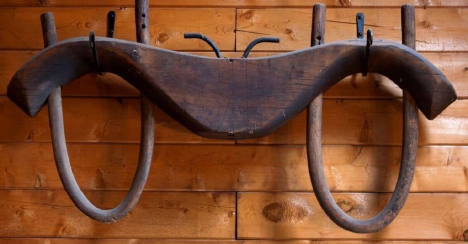

The yoke was (and is) a common implement used to link two animals together, assuring that they were moving in the same direction at all times. The yoke represented a shared labor of two animals—not mere co-existence. The yoke was used for an ultimate purpose—greater productivity. The yoke was designed to efficiently plow a field so that, ultimately, the harvest is greater.
You can begin to see the importance of the image to Jesus. The invitation is clear: come to Me and be yoked with Me. Be inseparably connected to Me. Move in the same direction I am moving. Share in all that I am doing. Watch your life become far more fruitful than you ever imagined.
The yoke is a whole way of life—a whole new way of being.
We are getting closer to understanding the puzzle. Still, if Jesus wants to invite us into His rest, why use an image of work—a yoke—rather than an image of freedom from labor, like a lounge chair at the beach?
Here is part of the answer: if Jesus had said to His apprentices, “Come, follow Me, and it will be a life of leisure,” it would not have been true. He could not say that, because it would have been a false promise.
In another honest moment, Jesus said, “In this world you will have trouble.” He also warned that His followers would face persecution and spiritual battle.
If Jesus isn’t offering a life of ease, what is He offering?
What is this yoke?
Part of the key to understanding this is found in the second part of Jesus’ invitation:
Matthew 11:29 (ESV) — Take my yoke upon you, and learn from me, for I am gentle and lowly in heart, and you will find rest for your souls.
The Greek word here, manthanō, means to learn or to be taught. It is closely related to the word disciple—a learner.
In Jewish families, children often began their studies in what was called Beth Sefer—the House of the Book. Beginning at a young age, they would learn the Torah, the first five books of the Old Testament.
The best students would continue in what was called Beth Talmud—the House of Learning. These were often students from about ages ten to fourteen. Here they moved beyond memorization and learned how to think—how to ask questions, wrestle with answers, and study the rest of the Scriptures.
If a child showed exceptional promise, he might, in select cases, be given the privilege of apprenticing under a renowned rabbi, following that rabbi and learning from him an entire way of thinking and living. This was to enter Beth Midrash—the House of Study.
A particular rabbi had a way of interpreting Scripture—a way of understanding life, a whole school of thought, a biblical philosophy. That rabbi’s way of interpreting Scripture and living life was called his yoke.
To follow a rabbi was to live close to him and take up his yoke.
Now the puzzle becomes much clearer. When Jesus says, “Come to Me, take My yoke,” He is inviting His earliest followers—and us—to become His intimate, blessed apprentices. We get to walk with Him and see how He interprets Scripture, how He views life, how He addresses problems, how He lives with such power and joy and wisdom.
The Privilege: Why the Yoke of Jesus Is Such a Gift
Understanding the phrase “take my yoke” helps explain why the early disciples were willing to drop their nets and follow Jesus.
They were not the elite—but the invited.
And now the greatest rabbi of all, Jesus of Nazareth, was inviting them to apprentice with Him. Of course, they said yes.
It would be like an aspiring athlete being invited by a legendary coach for private training, or a young musician being taken on tour by a global artist, or a law student being invited to clerk for a Supreme Court justice.
That is what Jesus meant when He said, “Take up My yoke.”
Come, learn My whole way of being.
The promise deepens when you consider what Jesus is offering:
“I will give you rest.”
The rest is not a formula—it is Christ Himself.
Charles Spurgeon said:
“It is not thy hold of Christ that saves thee—it is Christ… it is what Jesus is, not what we are, that gives rest to the soul.”1
To take the yoke of Jesus is to take a way of grace rather than law. It is to flow in the power of His Spirit and to adopt His unhurried approach to life.
John Mark Comer once asked:
“Can you imagine a stressed-out Jesus?”2
Jesus is never restless—and those who walk with Him learn rest.
Dane Ortlund writes:
“His yoke is kind and his burden is light… like helium to a balloon.”3
Jesus isn’t diminished when you bring your burdens to Him. He is magnified.
He is like a lifeguard who rescues and rejoices in the rescue.
It is His joy to give you rest.
Conclusion
There is no such thing as a work-free life. Work is a gift. But Jesus invites us into a different kind of work.
A life yoked with Him is not less work—it is transformed work.
Because He sweated for you. He sweated blood for you.
He became the new Adam and bore the weight of sin once and for all.
It is finished.
So Jesus can say:
Come to me, all who labor and are heavy laden, and I will give you rest.
The Rabbi has invited you into rest that does not depend on escape—but on union.
His yoke is kind. His burden is light. And it changes everything.
And that is the Gospel.
Footnotes
- Charles H. Spurgeon, Morning by Morning: Daily Readings for Devotional Meditation, June 19, Morning. Originally published London: Passmore & Alabaster, 1866.
- John Mark Comer, The Ruthless Elimination of Hurry: How to Stay Emotionally Healthy and Spiritually Alive in the Chaos of the Modern World (Colorado Springs, CO: WaterBrook, 2019), chapter 1, “Hurry Is the Great Enemy of Spiritual Life in Our Day.”
- Dane C. Ortlund, Gentle and Lowly: The Heart of Christ for Sinners and Sufferers (Wheaton, IL: Crossway, 2020), chapter 6, “I Will Never Cast Out,” discussing Matthew 11:28–30.
 English